
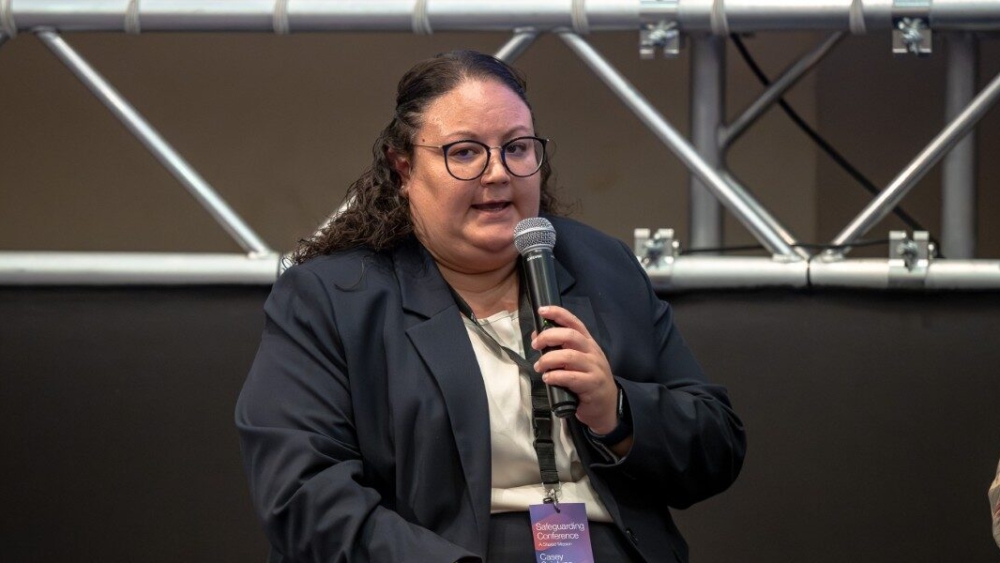

Casey Scicluna
Senior Manager, Richmond Foundation’
Where do you most often see safeguarding misunderstood or reduced within mental healthcare?
Safeguarding in mental healthcare is most often reduced to procedural compliance rather than understood as a continuous, relational responsibility. It is frequently treated as synonymous with reporting abuse to authorities or completing risk assessment forms, rather than as an embedded ethos of care. In many settings, safeguarding becomes conflated with risk management — particularly the management of risk to others — rather than protection from harm, coercion, neglect, or systemic failure.
Another common misunderstanding is equating safeguarding solely with children’s services or with severe physical abuse. In adult mental healthcare, issues such as overmedication, inappropriate use of restrictive practices, financial exploitation, digital vulnerability, or institutional neglect may not be recognised as safeguarding concerns.
What makes safeguarding distinct from, but inseparable from, good clinical care?
Safeguarding is distinct because it focuses specifically on protection from harm, abuse, neglect, exploitation, and violations of rights. It introduces legal, ethical, and human rights frameworks that extend beyond symptom treatment or diagnosis. Good clinical care may reduce particular mental health challenges whilst safeguarding ensures that, in doing so, the person’s dignity, autonomy, and safety are preserved.
However, safeguarding should be an integral part of good care because harm in mental health settings can occur through clinical processes themselves — for example, inappropriate restraint, failure to obtain informed consent and lack of trauma-informed approaches. A technically competent intervention delivered without attention to power imbalance or vulnerability can inadvertently create harm.
What struck you most about how safeguarding was framed at the Safeguarding Commission 2025 conference?
What stood out most was the shift from viewing safeguarding as reactive investigation toward understanding it as systemic prevention. The emphasis appeared to move beyond incident response and toward culture, governance, and accountability.
What concrete vulnerabilities in Maltese mental healthcare need clearer safeguarding responses?
In Malta, centralisation of services may create safeguarding pressures. Mental Health Facilities can carry significant demand or aging infrastructure can heighten risks related to privacy, dignity and institutional neglect.
Limited community alternatives may increase reliance on inpatient care and restrictive practices. Transitions, such as movement from child to adult services, present vulnerability point requiring coordinated safeguarding oversight.
Malta’s close-knit social structure may complicate confidentiality and reporting. Stigma remains a safeguarding concern; when individuals with mental illness are perceived as unreliable, disclosures of harm may be discounted.
If Malta treated safeguarding in mental health as a national priority, what would need to change first?
If safeguarding in mental health were to be treated as a true national priority in Malta, the first essential change would be the development of a comprehensive, unified national safeguarding framework specifically tailored to mental health services. While safeguarding responsibilities currently sit across health, social services, and legal structures, greater clarity, coordination, and accountability are needed. A national strategy should clearly define reporting procedures, interagency collaboration, risk management standards, and oversight mechanisms.
Investment in workforce development would also be critical. Mandatory and ongoing training in trauma-informed care, risk recognition, and early intervention should extend beyond mental health professionals to educators, community workers, and law enforcement.
Improved data collection and monitoring systems would strengthen transparency and allow for evidence-based planning. Finally, meaningful service user and family involvement in policy design would be necessary. Sustainable safeguarding depends not only on legislation, but on fostering a culture that consistently prioritises prevention, dignity, and timely response across all services.